Why Networking Isn't "Selling Out" (The Professional Relationship Reality)

If you're an actor who cringes at the word "networking," you're not alone. Most actors I've worked with feel the same way. The word conjures up images of forced smiles, business card exchanges, and the kind of calculated self-promotion that feels like the opposite of everything that drew you to acting in the first place.
You became an actor to express something truthful. Networking feels like the furthest thing from the truth. It feels transactional. Manipulative. Fake.
I understand the resistance. But I want to suggest that it's based on a misunderstanding — not of your values, but of what effective networking actually is.
The Transaction Trap
Here's what most people think networking means: you go to an event, identify the most useful people in the room, introduce yourself, pitch your work, collect their contact details, and follow up with an email reminding them who you are and what you want.
That is networking. Bad networking. And actors are right to hate it, because it doesn't work — at least not in the way that matters for a sustainable career.
Transactional networking fails for a simple reason: everyone in the room can feel it. When someone approaches you with an agenda, you know. You might not be able to articulate it, but something in the exchange feels off. The smile is a fraction too eager. The interest in your work is a fraction too pointed. The conversation steers a fraction too quickly toward what they need from you.
This is the same instinct that directors use when casting — the ability to sense whether something is genuine or performed. And just as the camera knows when you're acting, the people you're networking with know when you're working them.
A Different Principle
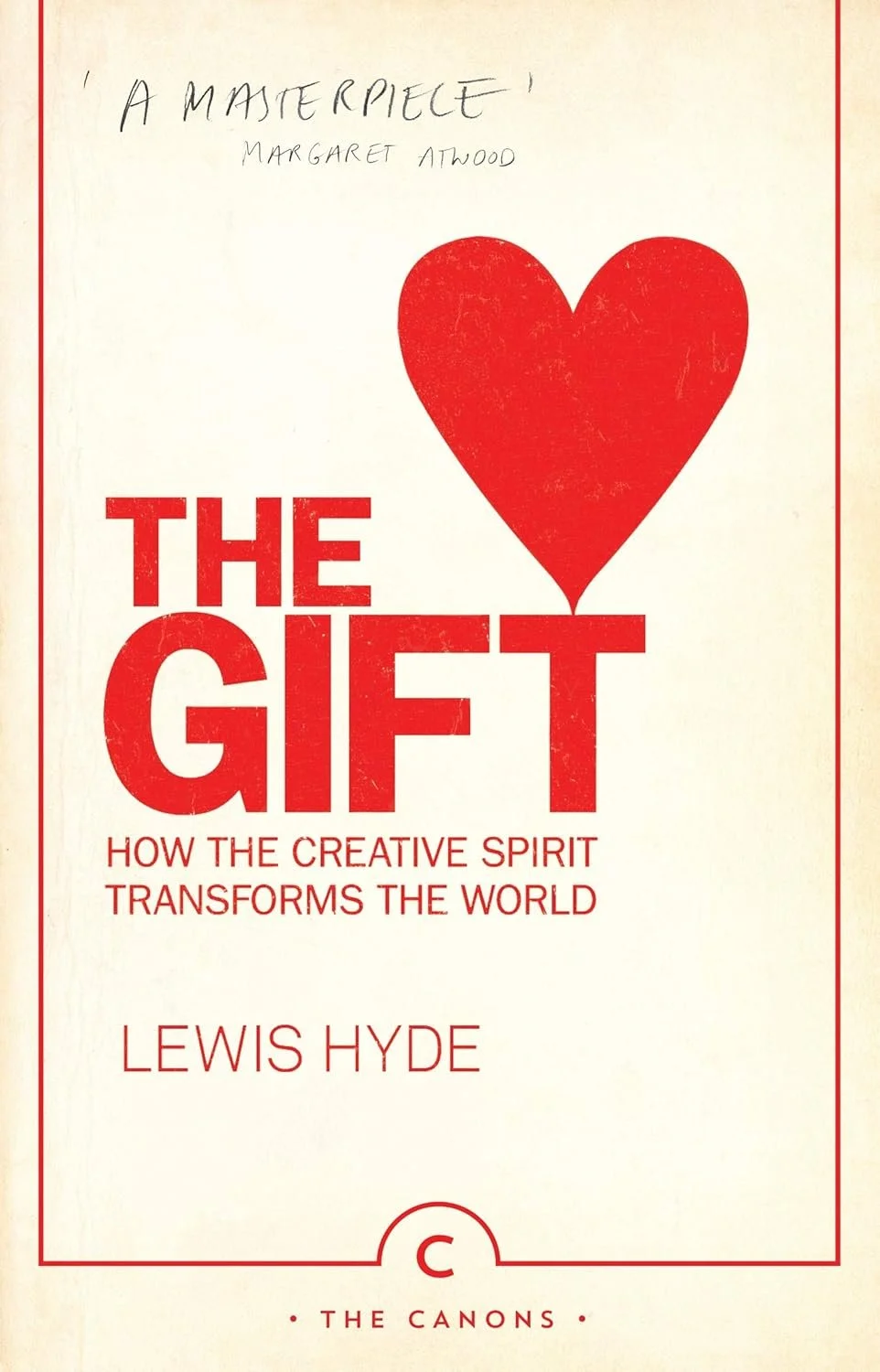
There's a remarkable book by Lewis Hyde called The Gift that changed how I think about professional relationships. Hyde's argument — and I'm simplifying a rich and complex book — is that creative work operates on fundamentally different principles from market transactions.
In a market economy, the exchange is simple: I give you something, you give me something of equal value, and we're done. The transaction is closed. Neither of us owes the other anything.
But gifts work differently. A gift creates a relationship. It circulates. It moves from person to person, and in moving, it grows rather than depletes. The key principle is this: a gift that stops moving loses its value. A gift that circulates creates abundance.
Hyde was writing about art and creativity, but the principle applies directly to how professional relationships work in the screen industry — or any creative industry.
What This Looks Like in Practice
Let me tell you a story.
Years ago, I was at a networking event and spotted someone I recognised — a television presenter who fronted programmes on technology and current affairs. I liked her presenting style. She worked in an area that had absolutely nothing to do with what I was doing as a screenwriter and director, trying to get my own projects greenlit. There was no strategic reason to approach her. She couldn't help my career. She wasn't a producer, a casting director, or a commissioning editor.
I went up, introduced myself, and told her how much I enjoyed her work. She was clearly pleased. We chatted briefly. I left it at that, glad simply to have said hello to someone whose work I admired.
That was the gift. No agenda. No pitch. No business card exchange. Just a genuine expression of appreciation for someone's craft.
Weeks — possibly months — later, I ran into her again at another event. She remembered me. She remembered that I'd mentioned one of my projects. And she said, "There's someone here you should meet."
It turned out that someone was one of the top film sales agents for projects exactly like mine — an old school friend of hers. That introduction became one of the most valuable professional contacts of my career.
I could never have engineered that. If I'd walked into the first event with a list of targets and an agenda, I wouldn't have approached a current affairs presenter. She was irrelevant to my goals. But because the gift was genuine — because I approached her with nothing more than honest appreciation — it circulated. It moved. And it came back in a form I could never have predicted.
Why This Matters for Actors
You already know the difference between a genuine moment and a performed one. You spend your professional life creating truth under artificial circumstances. You know that the most powerful performances come from authentic impulse, not calculated effect.
Networking works the same way. The actor who walks into an industry event thinking "I need to meet casting directors" will come across as needy and strategic — even if they're perfectly charming on the surface. The actor who walks in genuinely interested in the people around them will make connections that last.
The Gift Must Move
Hyde's central insight is that the gift must keep moving. What you receive, you pass on. Someone gives you a useful piece of information — you share it with someone else who needs it. Someone introduces you to a contact — you do the same for someone else when the opportunity arises. The gift circulates, the network grows, and the relationships that form are deeper and more durable than any business card exchange.
The actor who hoards every contact and guards every piece of inside knowledge is operating on market logic — treating relationships as scarce commodities. It feels safe, but it impoverishes the network. The actor who gives freely creates abundance.
The Resistance Is Misplaced
For many actors, the resistance to networking runs deep. It feels like compromising your identity as an artist. But the resistance isn't really about networking — it's about a particular kind of networking: the transactional kind, the agenda-driven kind. You're right to resist that. It doesn't work.
What Hyde describes is something different. It aligns with the same values that made you an actor in the first place: truth, generosity, and genuine human connection. The irony is that the thing actors think they have to sacrifice — their authenticity — is the very thing that makes networking work.
A Book Worth Reading
I'd recommend Lewis Hyde's The Gift to any actor struggling with the business side of their career. It's not a networking manual — it's a profound exploration of how creative work circulates in the world, and it will change how you think about professional relationships.
The principles in it have informed much of my own thinking about how actors can build sustainable careers without compromising their artistic integrity — a subject I explore in depth in my forthcoming book, The Alchemy of Screen Acting.