CATEGORY 3: AUDITION TECHNIQUE
Core skill for converting opportunities into work
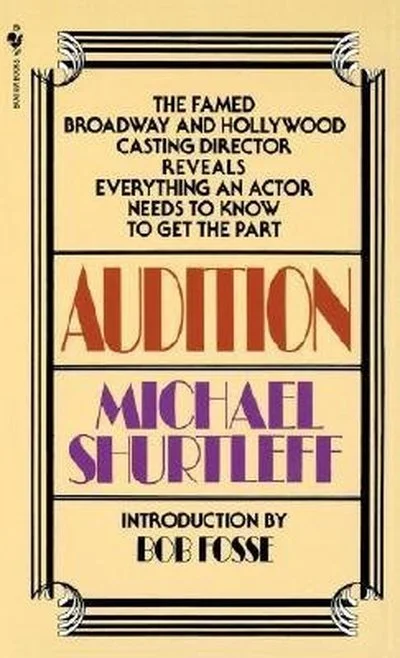
Audition by Michael Shurtleff (Bloomsbury USA, 1978)
Michael Shurtleff spent decades casting Broadway's biggest shows before crystallising his hard-won wisdom into twelve "guideposts", transforming vague audition material into specific playable choices. This legendary guide opens with bracingly practical advice—ask if you're in the light, never memorise scripts, lie about being late ("held up at another audition")—before diving into the systematic framework that made it the gold-standard audition text. Shurtleff's distinctive voice emerges through dialogue format, showing him coaching actors through scenes, repeatedly challenging their safe, conventional choices with penetrating questions like "Where is the love?" in apparently loveless confrontations.
The twelve guideposts provide analytical handholds preventing common traps. Relationship demands emotional attitude beyond mere fact—knowing she's your wife means nothing until you decide how you feel toward her now. "What are you fighting for?" replaces passive motivation with active objective—Chekhov's Three Sisters isn't about not getting to Moscow but fighting like hell to get there. The Moment Before loads the emotional state you bring onstage. Humour relieves tension even in tragedy. Opposites create dimensional performance—whatever motivation you choose, its opposite also exists, because "consistency is the heart of dull acting." Discoveries mean treating everything as happening for the first time. Communication requires completing the circle—sending and receiving feelings, not just words. Importance elevates everyday choices to life-and-death stakes. Find the Events’ marks shifts where understanding changes. Place uses the environment. Game Playing and Role Playing reveal the masks characters wear. Mystery and Secret acknowledge what's hidden.
Shurtleff's teaching style comes alive through memorable casting stories. Dustin Hoffman was terrified of singing an audition for The Apple Tree—Shurtleff repeatedly listed him, Mike Nichols asking daily, "Is the famous Dustin Hoffman coming in today?" Finally, Hoffman appeared, couldn't sing, but gave a reading of such "imagination, intelligence, and humour" that Nichols cast him later in The Graduate over producers' catatonic shock. Barbra Streisand arrived unknown in an oversized raccoon coat, surveyed the theatre: "I got to fill this big place?" Then sang, dropped the coat—"I like it here"—before the slow "Happy Days Are Here Again" made her famous. Both knew preparation was extensive, "very little was left to chance."
The book's greatest insight: actors sabotage themselves, making "everyday choices" when auditions demand life-and-death stakes. Playing Laura's shyness in Glass Menagerie as looking down, speaking softly, being terrified creates "dull and half-dead" performance—instead of fighting for your mother to see your dreams, to work with children where you'd be happy. Playing safe generic choices versus bold specific ones separates working actors from wannabes. Shurtleff repeatedly insists that actors use "I", not "he" when approaching a character, put themselves fully into the situation rather than distance themselves through judgment. His framework remains startlingly practical forty-plus years later because the guideposts transform paralysed, hoping-inspiration-strikes into systematic preparation, in extracting maximum meaning from minimal audition sides. Essential foundational technique.
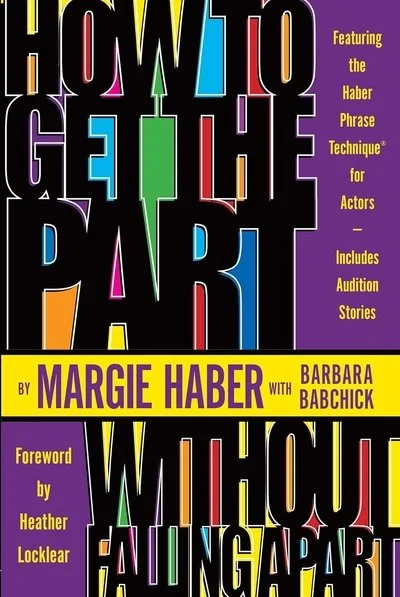
How to Get the Part... Without Falling Apart! by Margie Haber (with Barbara Babchick) Nick Hern Books, 2008 (revised edition)
Hollywood audition coach Margie Haber—whose clients include Brad Pitt, Halle Berry, Vince Vaughn—addresses the problem that most actor training ignores: how to audition. Actors receive extensive technique training but zero audition preparation. The title captures the dual crisis: technical preparation means nothing if psychological panic destroys performance. Most audition failures stem from mental collapse, not inadequate skill.
Psychological Roadblocks. The Success/Failure Syndrome: actors secretly prefer losing parts to risking genuine rejection, avoiding preparation to maintain the excuse "I didn't have time." Reframe auditions as creative opportunities rather than judgments. "It's a numbers game"—twenty-five committed auditions will eventually book work. Casting directors aren't enemies; they need actors desperately. Gabriel Byrne's turning point: unemployed for a year in London, then "got two jobs on the same day" when he stopped fearing the process.
The Haber Phrase Technique®—the book's signature innovation. Musicians read notes in groups; typists work in phrases; actors should read scripts the same way, not word-by-word. Three steps: eyes up for unit openings, eyes down for phrase groups (staying down longer than actors think possible), eyes up for resolutions (check-in moments assessing whether your intention succeeded). Use your thumb as a page marker. "Landings" complete thoughts by finishing phrases before returning to paper. Never memorise—you can't own words in limited preparation time, you'll panic when you forget them, and you waste time on rote learning instead of scene analysis. The technique permits using paper freely as an extension of your physical and emotional life.
Practical Scene Work. Establish strong relationships before walking in. Define clear intentions using action verbs with opposing adjectives: "push away my caring but interfering sister." Build detailed histories through personalisation and sensory work. Identify your "key phrase"—the line crystallising your character's core need. Box units and mark transitions with a pencil (nothing is permanent). Distinguish core feelings from masks: anger usually covers hurt, and indifference covers fear. Find humour even in drama—work against heaviness. Core and masking add dimension: Amanda in Melrose Place stayed ruthless but showed vulnerability flashes that made her likeable.
Moment-to-Moment. After preparation, trust the work. When your scene partner throws curves, adjust—nothing is set. Mistakes are gifts, forcing spontaneous responses. Don't panic when you lose place; accept it and continue. The audition is not a performance. You're allowed to use the paper.
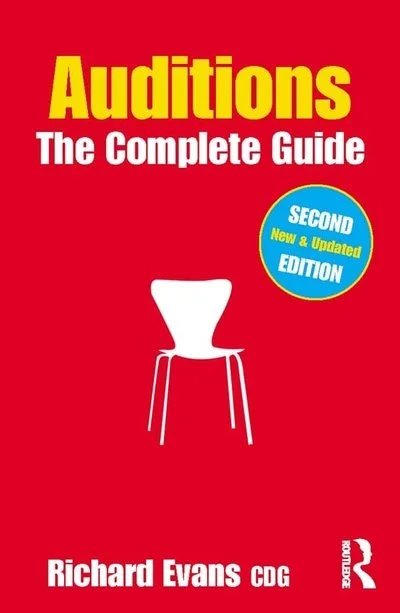
Auditions: A Practical Guide by Richard Evans Routledge, 2014 (Second Edition)
Richard Evans CDG—casting director since 1989, former actor for ten years—addresses the gap between technique training and audition reality. His mantra: "Be prepared for absolutely anything." This isn't hyperbole. He once auditioned for cornflakes, where he mimed waking up, discovering a beanstalk outside his window, hacking through branches to reach the kitchen, joining parents at the table, pouring cornflakes—" and we need all of that done stationary on that spot there." He went for it.
Self-Taping Technical Essentials. Neutral background (white wall, suspended sheet, or plain door). Lighting: point upwards, not directly at the face, or use the window opposite the location. Check the room acoustics for echo. Dead Letter Perfect familiarity—camera eyes, not buried in pages. Friend as camera person and reader, positioned slightly off-camera. Multiple takes per scene. Edit with free apps like iMovie, YouTube editor, or VideoPad—no flashy effects. File size problem: corporate inboxes accept a maximum of 8 MB; a one-minute HD clip = 87 MB. Solution: Dropsend Lite uploads 2 GB files for free, five sends monthly.
Commercial Casting Realities. The "ident": name, height, and the agent's name into the camera. Experienced commercial actors add profile turns and hand displays (backs showing nails, then palms). Prepared for miming imaginary products while delivering script—double concentration plus dexterity. Decisions rest with "The Client" (the manufacturer footing the six-figure campaign bill), not the director. Middle-aged ladies audition, then twenty-somethings get cast—brief changes constantly. One actor booked a yoghurt commercial because after licking an imaginary spoon, he noticed he'd missed a bit and licked again.
Sight Reading Mastery. Nina Finburgh is the undoubted guru, wrote Hot Tips for Cold Readings. Technique: memorise each line before speaking, not while speaking. Take time, don't gabble. Learn the piece but keep the script in hand, referring like a newsreader using an autocue. Mark your lines with a fluorescent highlighter (ask permission first if not your script). Print emailed sides on paper—don't squint at phone screens or balance laptops.
Preparation Practicalities. Do dummy travel runs to audition venues—timing and route-finding eliminate panic. Public transport, never drive (actors who double-park while yelling "Keep an eye on my car!" rarely get jobs). Always do "at least one thing every day for my career"—research, networking, calling contacts. Mark up personal scripts with emphases and emotions. Deep breath through the mouth, hold, sharp exhale alleviates nerves. Knee trembling during speeches: stand legs apart, weight balanced, or wear loose-fitting trousers.
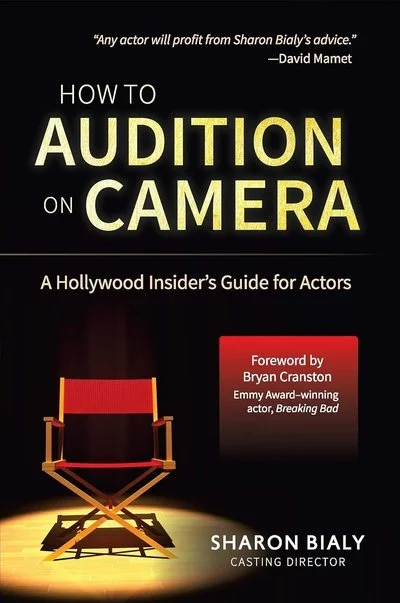
How to Audition on Camera: A Hollywood Insider's Guide by Sharon Bialy (with contributions from Bryan Cranston, Vince Gilligan, David Mamet) Barron's Educational Series, 2016 (Second Edition)
Emmy-winning casting director Sharon Bialy (Breaking Bad, Better Call Saul, The Walking Dead) answers 28 questions from the decision-maker's chair. Her office displays screenwriter Billy Ray's quote: "I'm not talented enough to be unprepared, are you?" Bryan Cranston's foreword: "I wish I'd had this practical advice when I started out."
CD's Actual Priorities. Talent and confidence—both equally critical. Four confidence keys: practice like an athlete trains (audition becomes just another practice day), please yourself first, not everyone, let go of marked preparation in the room (it's a trap), be in the moment. The goal isn't booking the job—it's "being remembered and brought in over and over again." Professional acting is a numbers game; maximise at-bats.
Off-Book Strategy. Keep sides in hand even when memorised—saves confusion, reminds viewers you'll improve once hired. Memorise first line, last line, and something middle—camera starts and ends on your eyes, not the top of your head. Exception: large guest star, recurring, or series regular roles require full memorisation now. Actors who memorise three-page monologues overnight earn the response: "That's a pro."
The Experienced Actor's Fatal Mistake. Ninety per cent of the time, Bialy directs experienced actors to do LESS. They're creative, have bodies of work, make strong choices—but forget the audition serves the text, not their instrument. The camera catches everything; simple choices are strongest and most authentic. Don't play tough to be tough—if writing is solid, toughness is inherent.
Audition Room Reality. Jon Bernthal (Walking Dead) sat down and confessed how badly he wanted the role, even saying he'd work craft services. Honest vulnerability gave insight into how he'd handle the character. He got it because he was so well prepared and specific—didn't nail first take, they played with the scene. Norman Reedus admitted he was "terrible at auditions." His first audition wasn't the best; he didn't get that role, but months later was offered another role written into the script.
Self-Tape Essentials. Deep blue sheet background. Camera at eye level (not shooting up/down). Read with someone—even a bad reader is better than none; don't record other lines and respond (timing won't be natural). Medium close-up, then close-up on face. Private link, not public YouTube. Send multiple takes in separate links.
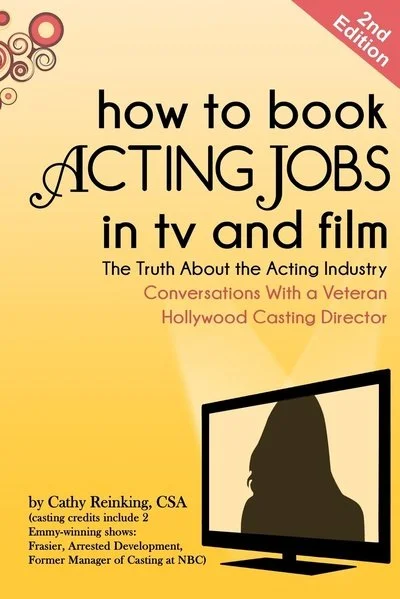
How to Book Acting Jobs in TV and Film (Second Edition): The Secret to Finding Success and Longevity as a Working Actor by Cathy Reinking, CSA, Self-published, 2012
Emmy-winning casting director Cathy Reinking (Frasier, Arrested Development, former NBC Manager of Casting) demystifies "The Room"—that unglamorous box with no set, costumes, or lights where actors must make CDs fall in love with them. Her office displays Billy Ray's quote: "I'm not talented enough to be unprepared, are you?" After watching 300 actors per role across thousands of auditions, she reveals what actually books jobs.
Natural Sexiness Defined. Not trashy flirtation—the innate life force reflected in eyes and confidence. Russell Crowe shows "a whole life in his eyes." Kate Winslet's eyes convey a full emotional gamut. Philip Seymour Hoffman isn't conventionally handsome, but we can't look away. The French call it "le chien" (the dog)—visceral, earthy appeal. Sexiness is being self-aware, not self-conscious, comfortable in your own skin, open and accessible.
Vulnerability Trumps Stereotype. Nice actors make the best villains (Alan Rickman in Die Hard, Christoph Waltz in Inglourious Basterds). Playing unsympathetic roles on the nose creates stereotypes—boring at best, repelling at worst. Amy Pietz asks, "What is she most afraid of?"—finds the vulnerable core of any strident role. Meryl Streep in Devil Wears Prada: a scene without makeup shows how fearful she is underneath. Brilliant actors go emotionally where audiences fear to go—raw, authentic, revealing the human condition.
Controlling Nerves is Non-Negotiable. No one hires nervous actors. YOUR job is making them comfortable, not theirs to comfort you. If you're nervous, you can't take direction—won't get callbacks. Getting direction is good; it means CD thinks you're worth extra time. Sound stages are intimidating; directors have no time to work with you. The actor hired must handle himself because if you're the problem, you'll be replaced.
Multi-Camera Sitcom Rules. Material must be letter-perfect. Cannot paraphrase, add "ahs," invert lines—destroys the rhythm writers painstakingly achieved. Think Noel Coward or Shakespeare—all about rhythm and timing. Lines overlap like a real conversation. Energy bright but not TOO bright. Don't try to be funny—natural humour plus sticking to words equals funny. Let words do the work.
Room Realities. Audition begins near the building—writer/producers running late might encounter you outside. Don't socialise in the waiting room—concentrate on the material. Headshot and résumé already stapled to your PERSON, not in your purse. Hand over in one simple move; wasted time irritates CDs. The Room isn't about seeking approval—it's about booking jobs to practice your craft.
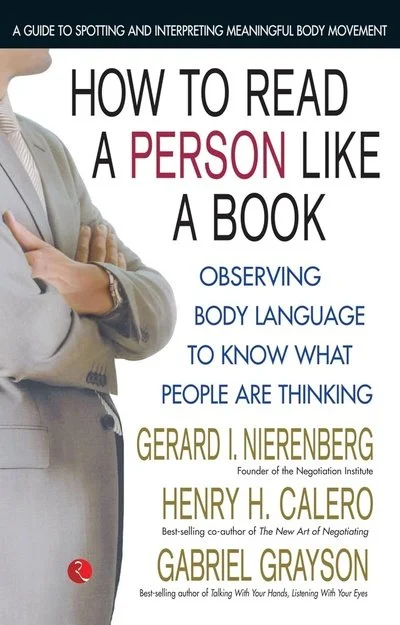
How to Read a Person Like a Book by Gerard I. Nierenberg and Henry H. Calero Barnes & Noble, 1971
Gerard Nierenberg and Henry Calero's classic systematically catalogues nonverbal communication, revealing how body language betrays true feelings, often contradicting words. Their crucial insight: gestures come in clusters. Single gestures mean little; consistent patterns reveal authentic states.
Airport Laboratory. Woman apprehensive about flying pinches fleshy part of hand for reassurance ("I had to pinch myself to make sure it wasn't a dream"). Nervous male sits rigid, ankles locked, hands clenched together, making one big fist, rhythmically massaging thumbs. Three phone booth callers reveal relationships nonverbally: the salesman stands at attention, coat buttoned; the husband slouches, shifts weight, chin on chest, nodding "yeah, yeah"; the lover hunches a shoulder, concealing face, head tilted, handles phone as if object of affection.
Openness vs. Defensiveness. Open hands signal sincerity—Italians use freely when frustrated, placing on chest, gesturing "What do you want me to do?" Children proud of their accomplishments show their hands openly; guilty children hide their hands in pockets or behind their backs. Men open or frequently unbutton coats. Higher agreement frequency was recorded among men with coats unbuttoned than buttoned. Crossed arms: universal defensive posture. Baseball umpire facing an angry manager crosses arms signalling he's prepared to defend the decision. This gesture influences group behaviour—one person crossing arms causes others to follow. Arms crossed with fists reinforces defensiveness; white knuckles gripping biceps signal a nervous traveller during takeoff.
Confidence Clusters. Steepling—joining fingertips forming a church steeple—communicates absolute self-assurance. Sherlock Holmes and Nero Wolfe steeplers. Women use covert lower steepling (lap level); men elevate to eye level (higher = more important they feel). Authority position: hands joined behind back, chin thrust upward—the first-sergeant swagger. Feet on the desk signal territorial rights, dominance, and ownership. Leaning back, hands clasped behind head—essentially an American gesture, Southwest males use most frequently. Cigar-smokers light after achieving objectives, blow smoke upward when smug.
Nervousness Indicators. Clearing throat due to mucus formation from anxiety—a frequent signal of uncertainty. Whew sound: air-expelling "Whew, I'm glad that's over with"—termination of a doubtful situation. Cigarette-smokers, when extremely tense, either extinguish cigarettes or let them burn without smoking—contrary to popular belief.
American Figure-Four. Distinctly American competitive gesture: ankle resting on opposite knee. Europeans cross leg over leg. In 2,000+ recorded confrontations where one or both crossed legs figure-four style, almost every instance signalled a highly competitive stage. Settlements increased greatly when both uncrossed legs moved toward each other. Cannot recall one settlement where even one negotiator still had legs crossed.
CATEGORY 4: SHOWREELS AND PROFESSIONAL MATERIALS
Tangible proof of competence; #1 factor in CD risk assessment
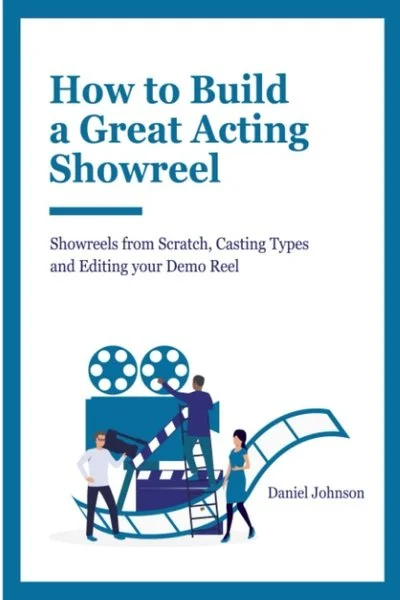
How to Build a Great Acting Showreel: Showreels from Scratch, Casting Types and Editing Your Demo Reel by Daniel Johnson, Amazon Kindle/Print, 2021
London-based filmmaker Daniel Johnson has created showreels since 2008 for actors and major drama schools (Guildhall, Arts Ed, East 15). Written during the pandemic lockdown after watching hundreds of showreels in a single day, the article shared widely by actors and casting directors led to a discussion with Emmy-winning casting director Chase Paris. Fills gap actors identify: recurring review comment "I wish this existed when I was at drama school."
Three Approaches Demystified. DIY phone shooting for free—scenes going "beyond self-tape realm", feeling like innovative film projects. Hiring showreel creation companies—choosing collaborators, scene partners, locations, accents. Writing original showreel scenes—includes example scripts teaching how to create winning screenplays. Script quality determines success regardless of production values: warns against "polishing turd." Aaron Sorkin's philosophy is embedded throughout: "somebody wants something, something's standing in their way"—showreel scenes need clear intention/obstacle, definite beginning/middle/end.
Bonus Chapter Mass-Viewing Insights. Subtle scenes often work better than big emotions. Showing connection with scene partners is integral to demonstrating skill—camera reads relationships, not isolated emotional displays. Common glaring mistakes get made repeatedly. Johnson's experience showcasing actors in the best possible way helps actors avoid these pitfalls.
Editing Guidance Crucial. Detailed advice on what material belongs on the reel. How to handle your own film/television footage. Mixing professional work with self-created scenes. Optimal length decisions. How much range to show without confusing your type? When to include material, when to exclude. One reviewer: "I love how it covers the editing process in great detail. Made me think about casting types and how I use work from TV and film."
Casting Types Balance. The chapter addresses balancing industry perception against artistic instincts. Encourages actors to understand how they're seen while following personal vision. Not compromising the authentic self while being pragmatic about marketplace realities.
Conversational Accessibility. Writing style praised for feeling like "personal consultation"—readers say "you feel as though you are in the room with Daniel getting the advice first-hand." Informative, relatable, easy to put into practice. Chase Paris: "His online tips and blogs have inspired so many actors of all levels of experience, so it's great that all his wisdom has now been compiled as one in this wonderful and essential book."
Democratizing Access. DIY phone-shooting section makes professional-quality showreel material accessible without expensive services. Three-approach structure provides options for all budget levels, supporting actors at different career stages. Johnson has created comedy sketches with 300+ million views, independent films screened at festivals worldwide, and written extensively for Spotlight, Raindance, and The Stage.
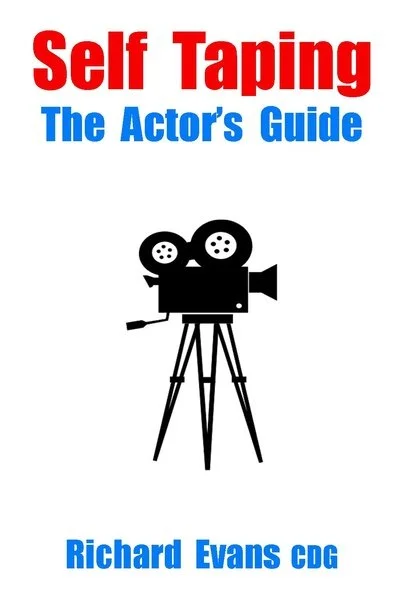
Self-Taping: The Actor's Guide by Richard Evans, CDG Nick Hern Books, 2016
Casting director Richard Evans (author of Auditions: A Practical Guide) provides a step-by-step technical guide to self-tape auditions—filming auditions at home rather than casting suites. Written when self-taping emerging trend; now industry standard post-pandemic. Seven-chapter structure covers the complete workflow from preparation through delivery. Most smartphones/tablets are sufficient—no expensive equipment required.
Location Five Factors. Setting (indoors definitely—outdoor microphones pick up traffic/wind). Light (window behind camera ideal; late morning/early afternoon best natural light). Background (neutral colours—white, off-white, light pastels; remove wall clocks showing shoot duration). Sound (carpeted rooms with furniture reduce echo; indoor shooting retains quality). Space (enough distance for zoom lens use—camera too close, uncomfortable/scary).
Lighting Technique. Anglepoise lamp uplight is most effective—bulb pointing upwards, not downwards like a ceiling light or across at face. Avoid naked bulbs (harsh); always diffuse with shade. Face should have light and shade, "rather like your voice"—not awash with bright light. Test shots are crucial before starting. Evening/dull-day shoots need artificial light; sunny days reposition slightly to avoid squinting.
Framing Specifics. Landscape orientation mandatory (matches viewing screens), never portrait (only takes up third of screen, black frames on either side). Close-up showing head and tops of shoulders. Critical "whitespace" around head—provides balance, prevents cutting off top of head. Too close: overpowering/scary, focus problems. Too wide: loses facial detail. Perfect: face dominant, appropriate whitespace, light and shade visible. Tom Bennett (Phoneshop, Family Tree) demonstrates ideal framing.
DLP (Dead Letter Perfect) Non-Negotiable. Learn words exactly as written—no substitutions, altered order, or paraphrasing. Two reasons: scripts timed meticulously with a stopwatch (especially TV); writers are precise about dialogue, may be present at callbacks. Word additions/subtractions mess up timings, require extra editing. Altered dialogue offends screenwriters who are decision-makers.
Ident Protocol. First recording: chatty, relaxed speech (two-three sentences) including name, agent's name, contact number, production/character auditioning for. Optional: start with a full-length wide shot before zooming to face. The paper "clapperboard" (Scene 1, Take 3) helps editing. Keep pen/paper noting good takes worth including versus discards—difficult remembering after multiple scenes.
Wardrobe Strategy. Suggest a character without a full costume—nobody wants a uniform/full outfit. Consider status (rich/poor, high-powered/manual job), age, and appropriate clothing. Charity shops for budget-appropriate outfits. Face primary focus, not clothing brightness. Include a full-length shot showing height/body shape, despite close-up emphasis—bottom half also well-presented.

Film Scenes for Actors (Comprehensive anthology collection covering 8 essential scene resources) Various Publishers, 1983-2015
Eight major collections spanning film extracts, original material, and theatrical adaptations provide showreel and practice material for actors across all ages and genres.
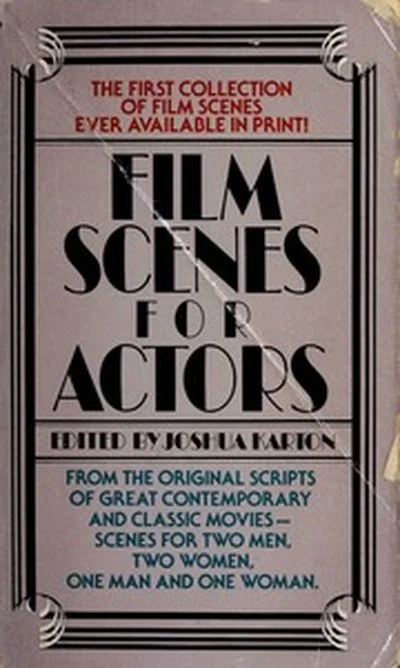
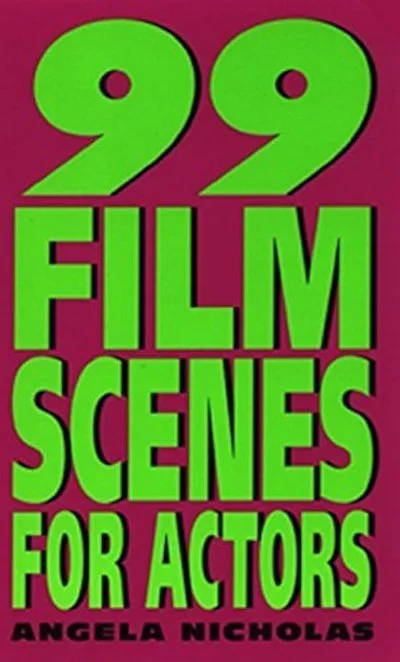
Film Extract Collections. Joshua Karton's Film Scenes for Actors, Volumes I & II (Bantam, 1983): 140 two-person scenes from actual screenplays—Casablanca, The Graduate, Chinatown, Network, Annie Hall. Karton's crucial emphasis: scenes excerpted from screenplays NOT adapted from plays—material previously unavailable to actors. Transcribed from actual screenplays (occasionally video when scripts unavailable), preserving screenwriters' stage directions. Angela Nicholas' 99 Film Scenes for Actors (Avon, 1999): contemporary 1970s-1990s films—Pulp Fiction, Good Will Hunting, Clerks, Body Heat. Emphasises flexibility: gender-switching, age changes, and orientation adaptations are possible. Scenes "stand alone, out of context" for classes/auditions.
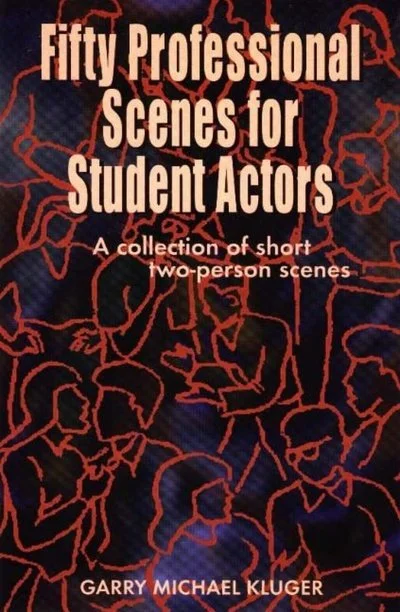
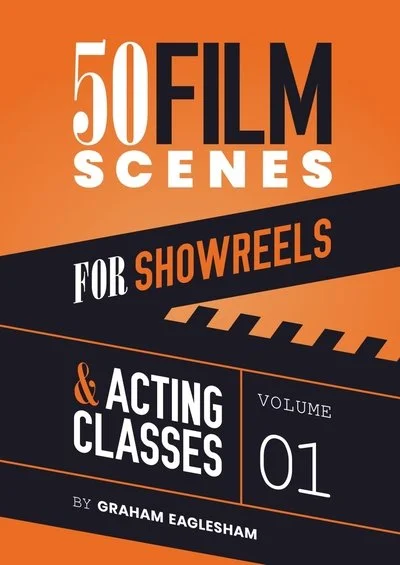
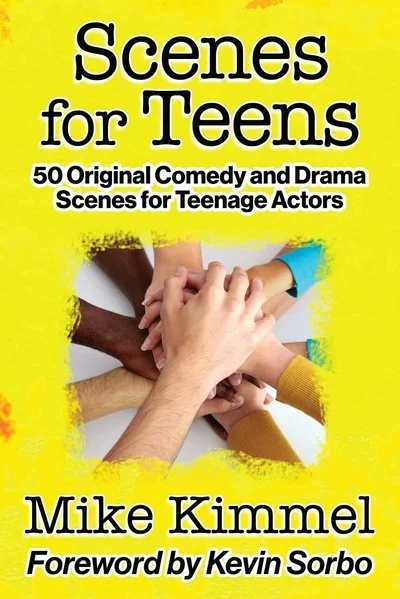
Original Material Collections. Garry Michael Kluger's 50 Professional Scenes for Student Actors (Meriwether, 1997): gender-nonspecific original scenes (he/she pronouns flexible), divided Comedy/Drama. Used by 250+ actors nationwide, described as "most-used original audition scenes in Los Angeles." Mike Kimmel's Scenes for Teens (CreateSpace, 2014, Kevin Sorbo foreword): 50 original scenes specifically for teenage actors—"conversational and real" dialogue with positive messages. Graham Eaglesham's 50 Film Scenes for Showreels & Acting Classes, Volume 1: extended-length originals spanning drama, crime, sci-fi, fantasy, comedy. Longer format allows actors to excerpt portions—choose the strongest 90-120 seconds rather than performing the entire piece.
Unique QR Code Feature. 101 Scenes For Showreels by The Actors Workshop Online provides copyright-compliant material with QR codes linking to performed examples—watch reference performances before shooting own versions. Suits all ages/genders, described as "tried and tested." Use as a structural reference only; avoid mimicking performances.
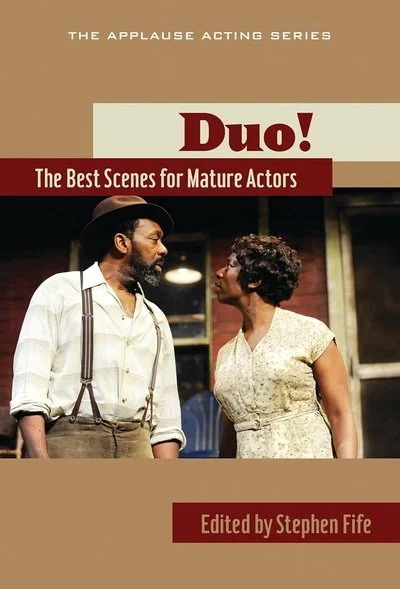
Theatrical Adaptation Option. Stephen Fife's Duo! The Best Scenes for Mature Actors (Applause, 2015): scenes from Arthur Miller's The Price, O'Neill's Journey into Night, and Dorfman's Death and the Maiden. While theatrical material, actors can adapt for showreels by streamlining dialogue. AI tools excel at converting theatrical scenes to screen-realistic format: request "adapt this for screen showreel—naturalistic dialogue, remove theatrical devices, maintain conflict, 90-120 seconds total."
Copyright Considerations Critical. Karton and Nicholas contain copyrighted screenplay material—suitable for classes/auditions (educational fair use) but murky legal territory for commercial showreels uploaded publicly. Original material (Kluger, Kimmel, Eaglesham, Actors Workshop) copyright-cleared for recording with book purchase. Avoid recognisable scenes from massive hits—casting directors compare your performance to iconic originals (unfavourable comparison inevitable). Better strategy: original material where you're the only reference point.
Selection Strategy. Choose scenes demonstrating castable type rather than range—casting directors want confirmation you fit roles they're casting NOW. Prioritise conflict-driven scenes showing a character pursuing an objective against an obstacle. Avoid monologue-heavy material—showreels require interaction. 90-120 seconds per scene is ideal, complete dramatic arc.