The Archer and the Actor: What a Zen Archery Master Can Teach You About Screen Acting
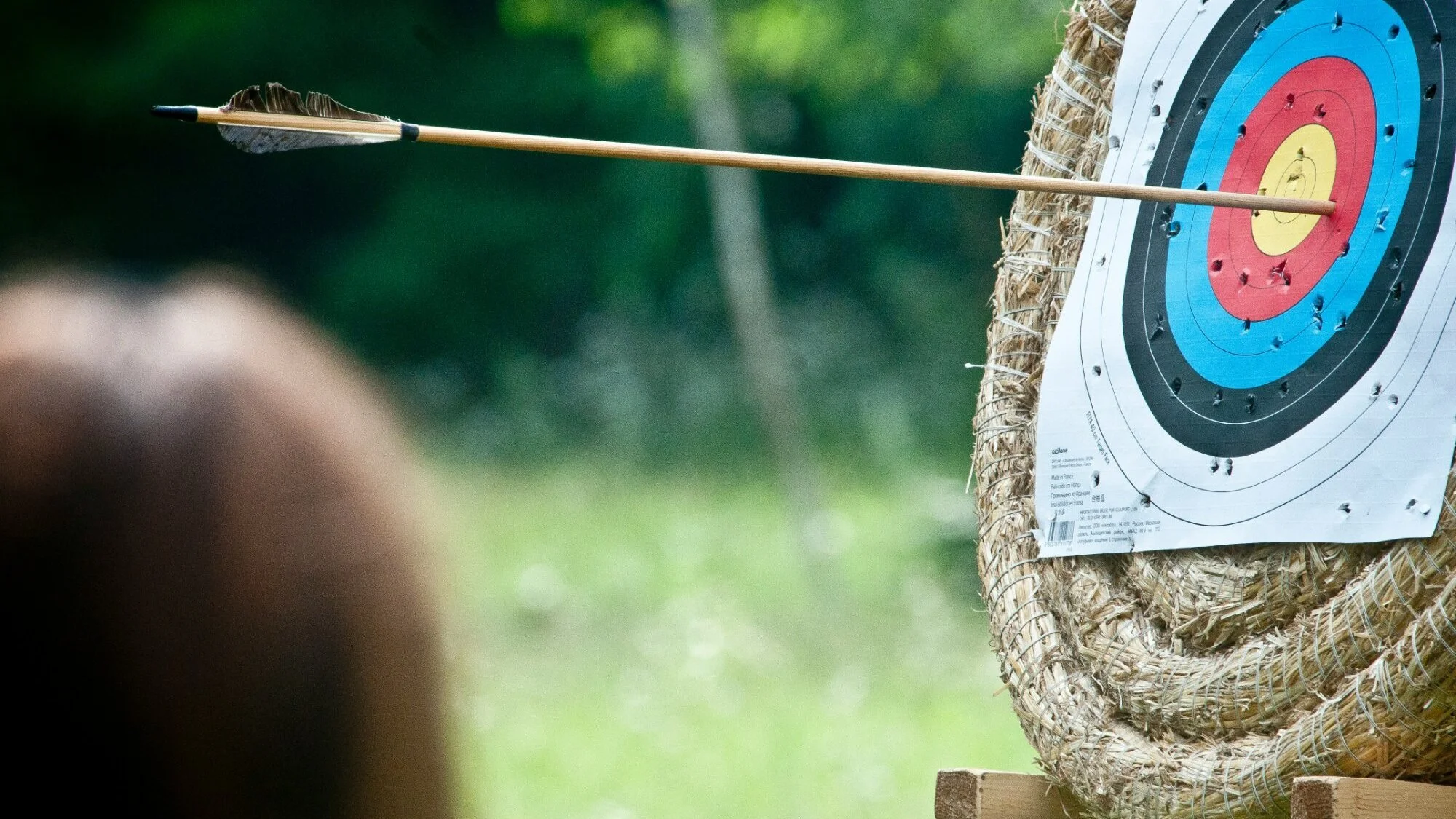
The Paradox You Already Know
Every screen actor lives with a contradiction. You have to hit your mark, remember your lines, find the light, and match continuity — while appearing to do none of these things. The camera demands absolute technical precision delivered with absolute naturalness. The moment it sees you trying, it stops believing you.
In 1948, Eugen Herrigel, a German philosophy professor, published a short book about the six years he spent studying archery under a Japanese Zen master. The book is called Zen in the Art of Archery, and it has almost nothing to do with archery. It has everything to do with the problem you face every time someone calls "Action."
Herrigel's Master told him from the outset: archery is not practised for hitting targets. The target is a byproduct of something deeper. As Suzuki writes in the introduction: "The archer ceases to be conscious of himself as the one hitting the bull's-eye." For actors, the camera is your bull's-eye — and self-consciousness kills the shot.
Breathing First, Bow Later
Herrigel expected to start shooting arrows. Instead, he spent weeks doing breathing exercises before he was allowed to touch the bow. The Master taught him that breathing in binds and combines, holding the breath makes everything go right, and breathing out loosens and completes.
When Herrigel finally protested that he couldn't draw the bow properly, the Master told him he was breathing wrong. Then he drew his own powerful bow and invited Herrigel to feel his arm muscles. They were completely relaxed, as though doing no work at all.
If you've ever wondered why every acting teacher starts with relaxation and breath work, this is the answer. It's not a warm-up. It's the foundation. The camera reads tension instantly — in your jaw, your shoulders, your hands, your eyes. Effortless strength requires preparation that most actors consider optional. It isn't.
The Technical Trap
Herrigel was a Western academic. He analysed, measured, and calculated. And he failed. For months, he tried to master the draw through physical effort and intellectual understanding, and the harder he tried, the worse it got.
The Master's instruction was blunt: "Don't think of what you have to do, don't consider how to carry it out!"
Actors fall into the same trap every day. Where's my light? Am I on my mark? Is this my good side? Can they see my hands? Am I giving the same reading as the last take? The more you think technically, the less you inhabit the moment. You become what Herrigel describes as the centipede that freezes because it starts thinking about the order its feet should go in.
The paradox: you must master technique so thoroughly that it becomes invisible. Not abandoned — invisible. The marks, the continuity, the eyeline — all of it has to be so deeply practised that it requires no conscious attention, freeing you to actually be present in the scene.
The Release — Screen Acting's Central Problem
After a year of breathing and drawing, Herrigel faced the real challenge: loosing the arrow. He could not do it without jerking, which ruined the shot. Every time he tried to let go deliberately, his body betrayed him.
The Master told him the shot must take him by surprise, "as if the bowstring suddenly cut through the thumb that held it." He compared it to a child holding a finger: "It grips it so firmly that one marvels at the strength of the tiny fist. And when it lets the finger go, there is not the slightest jerk."
This is screen acting's central problem. You have to deliver the line, hit the emotional beat, complete the action — without showing your method. The moment you "perform" the performance, it dies. Anyone who has watched an actor push for emotion on camera knows what this looks like: effort visible, truth absent.
The performance must release through you, not from you. You prepare, you commit, you stay present — and then something happens that is both yours and not yours. The best takes surprise you. That's not an accident. That's the mechanism working properly.
The Shortcut That Doesn't Work
During a summer break, Herrigel decided to solve the problem his own way. He worked out that if he gradually eased the pressure of his fingers on the thumb, the arrow would release itself — smoothly, unexpectedly. Technically, it worked. He was delighted.
At the next lesson, he demonstrated his breakthrough. The Master watched one shot, asked him to repeat it, then took the bow from his hands, sat down with his back to Herrigel, and refused to teach him further.
The Master had detected the deception instantly. Herrigel had found a mechanical trick to simulate what should have been a genuine release. The Master's verdict: "You see what comes of not being able to wait without purpose in the state of highest tension."
Every actor knows this temptation. Indicating. Manufacturing emotion. Finding a clever technical fix for something that should come from deeper preparation. Producing a result that looks right but isn't. The camera sees through it, just as the Master did. There are no shortcuts to what Herrigel's Master called "artless art."
"It Shoots"
After years of failed effort, something shifted. Herrigel stopped caring whether he succeeded. He went through the motions without expectation or anxiety. Then one day, after a shot, the Master made a deep bow and broke off the lesson.
"Just then 'It' shot!" he cried.
When Herrigel asked what he meant by "It," the Master replied: "Once you have understood that, you will have no further need of me."
Later, after more right shots had begun to come, the Master asked: "Do you now understand what I mean by 'It shoots,' 'It hits'?" Herrigel answered: "Is it 'I' who draws the bow, or is it the bow that draws me into the state of highest tension? Do I hit the goal, or does the goal hit me?" In other words, by the time it works, you can no longer tell where your preparation ends and the performance begins. The separation between actor and character dissolves — not through effort, but through the absence of it.
When technique becomes unconscious, when preparation is complete, and ego steps aside, something takes over. Not "I am acting" but "It acts through me." The character, the moment, the truth of the scene — it shoots, it hits. Your job isn't to make it happen. Your job is not to prevent it from happening.
What You Can Actually Do With This
Herrigel's book is under a hundred pages, and it won't teach you how to act. But it will teach you something about the psychological shift that underlies everything else — the shift from forcing to receiving, from effort to readiness, from self-consciousness to self-forgetfulness.
The Master's instruction to stop worrying about results applies directly to the audition room. "You must free yourself from the buffetings of pleasure and pain," he told Herrigel. "Learn to rejoice as though not you but another had shot well." Stop asking "How did I do?" after every take. Your preparation is your responsibility; the result is not.
This isn't mysticism dressed up as career advice. It's a practical observation about how skilled performance actually works — in archery, in swordsmanship, in painting, and on camera. You prepare thoroughly. You let technique become unconscious. You trust "It" to act.
The shot loosens when you stop trying to loosen it. Or, in plain English: the performance arrives when you stop forcing it.
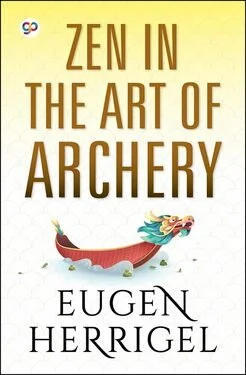
Zen in the Art of Archery by Eugen Herrigel (1948) is available from Amazon. At under 100 pages, it rewards re-reading during casting droughts, career plateaus, or those stretches when you've forgotten why you started.
Header image: Balint Mendlik on Unsplash.